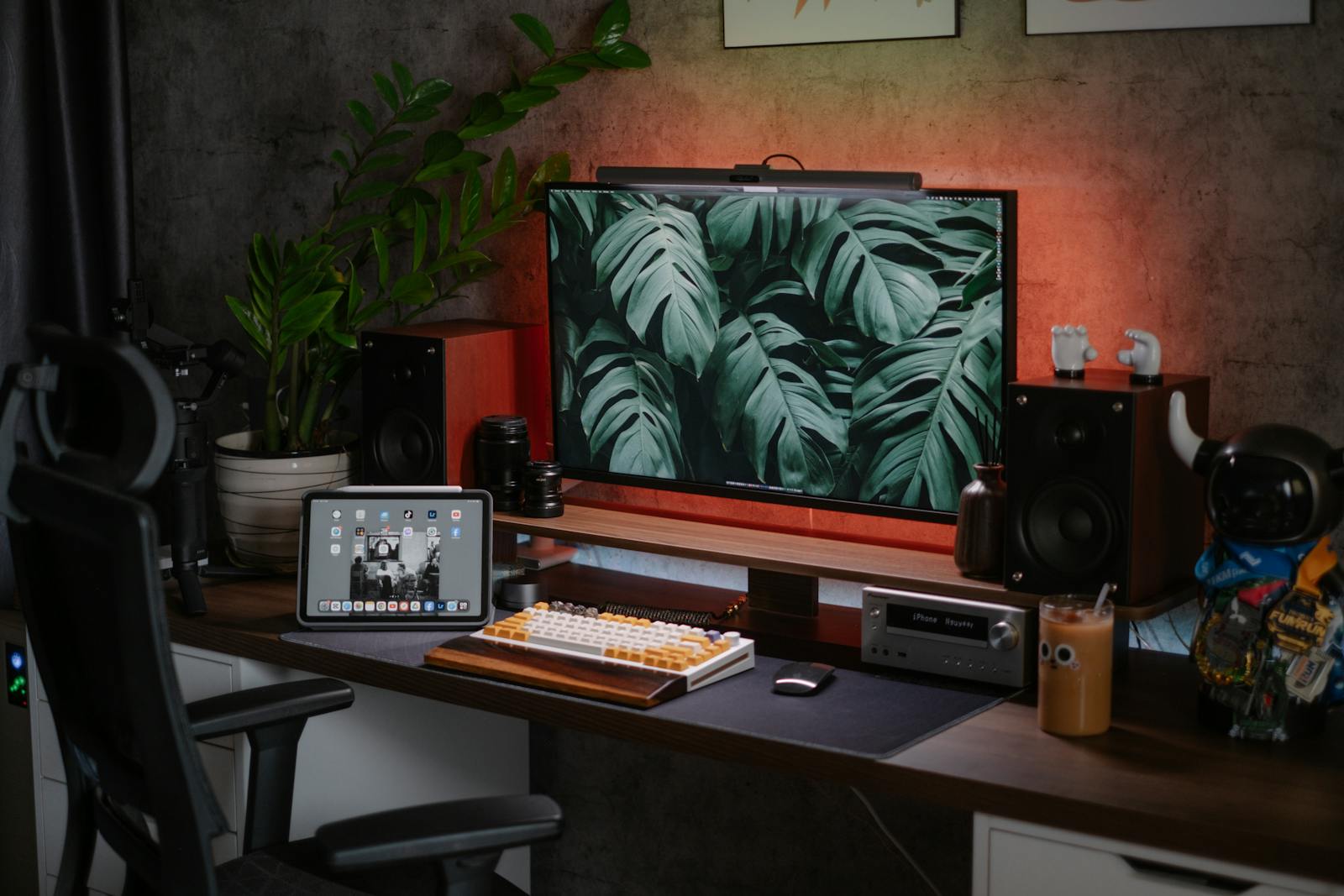
Focus mode
You need visual clarity, fewer touches, and a surface that keeps you inside the task instead of tempting side motion.
Choose electronics that reduce hand travel, visual clutter, and unnecessary reach.
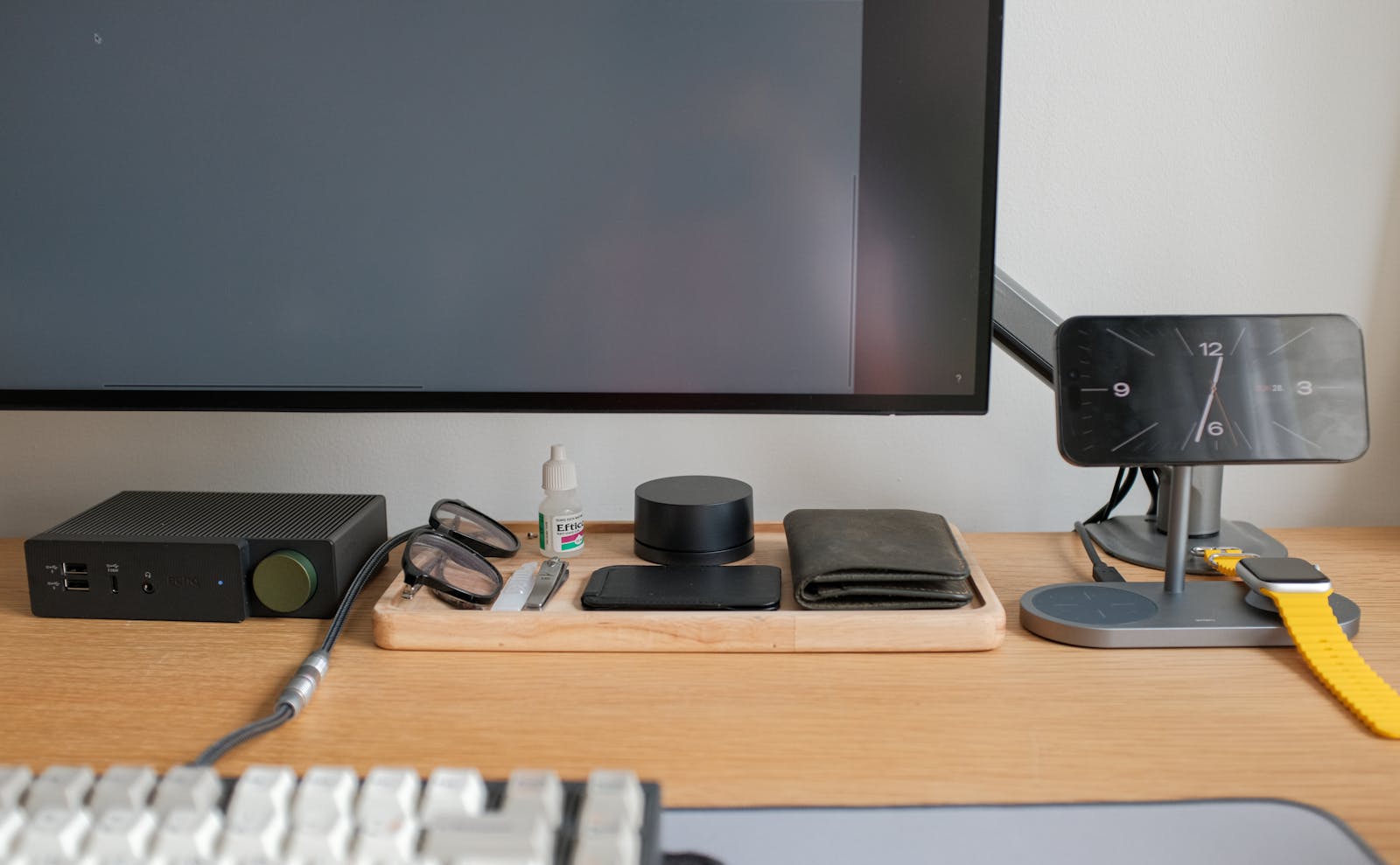
The same surface has to support deep focus, quick calls, and a clean reset at the end of the day. That means desk setup electronics should be chosen by working mode, not by whether a single product looks nice in isolation.
Good setups change posture and purpose throughout the day. The right electronics support those shifts without forcing a total rebuild every time your work changes shape.
You need visual clarity, fewer touches, and a surface that keeps you inside the task instead of tempting side motion.
Choose electronics that reduce hand travel, visual clutter, and unnecessary reach.
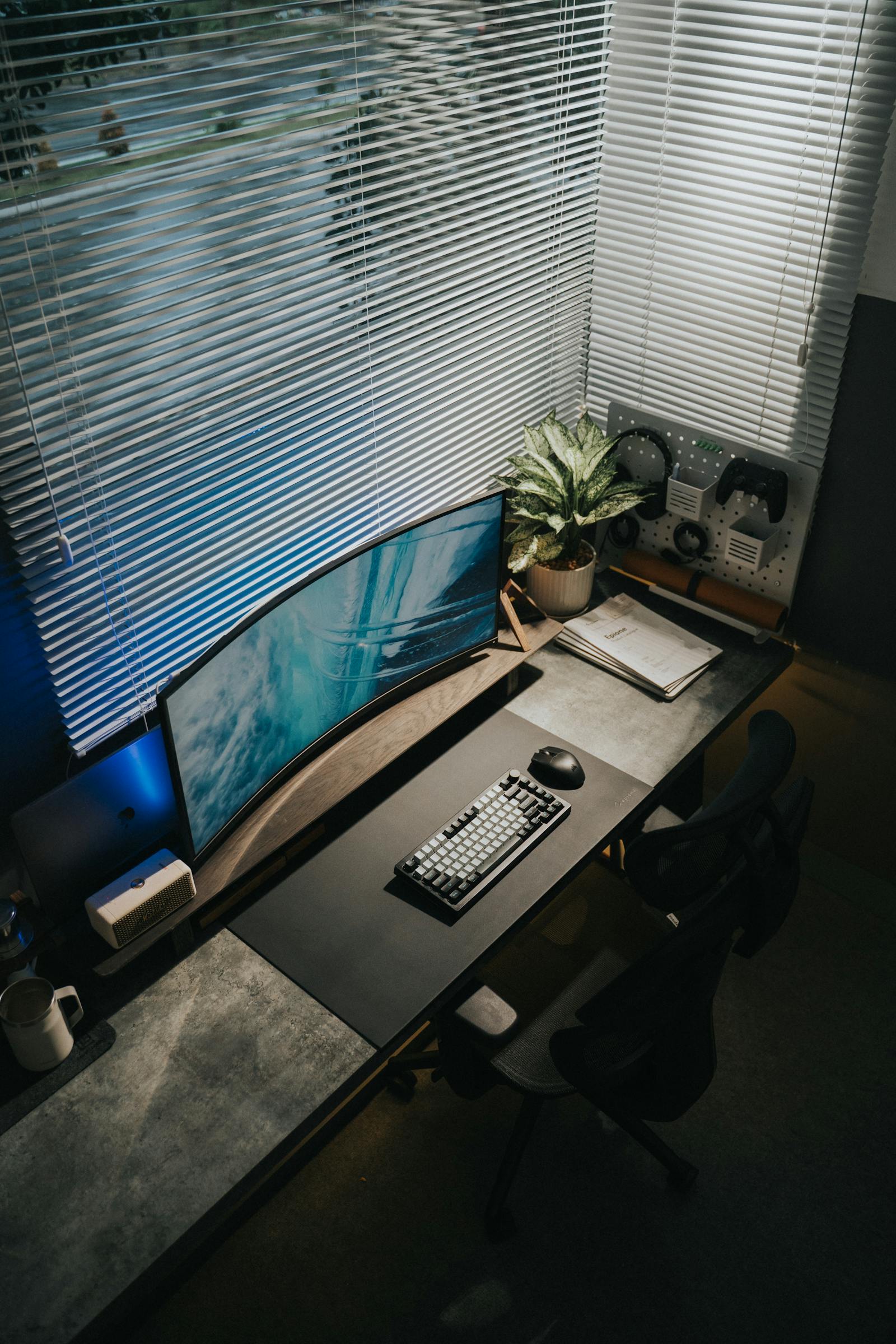
You need faster transitions, clearer sound, and tools that help you move between presence and note-taking without friction.
The desk should support live conversation without turning into a tangle of temporary fixes.
You need an end-of-day rhythm: charge, tidy, and restore the surface so tomorrow starts clean instead of mid-chaos.
Reset mode is where small electronics either create peace or create tomorrow’s first frustration.
Fewer visible decisions, better visual lines, and equipment that stays ready without demanding attention.
The desk shifts toward speaking, listening, framing, and fast reach without losing structure.
Charging, docking, and visual cleanup matter here as much as productivity gear matters during the work block itself.
Because desk frustration usually comes from transitions between tasks, not from one missing object on a list.
When the tools look refined yet still force awkward reach, slow switching, or daily reset mess.
Start where the day changes shape: focus, calls, or reset. The weakest mode often reveals the right next purchase.